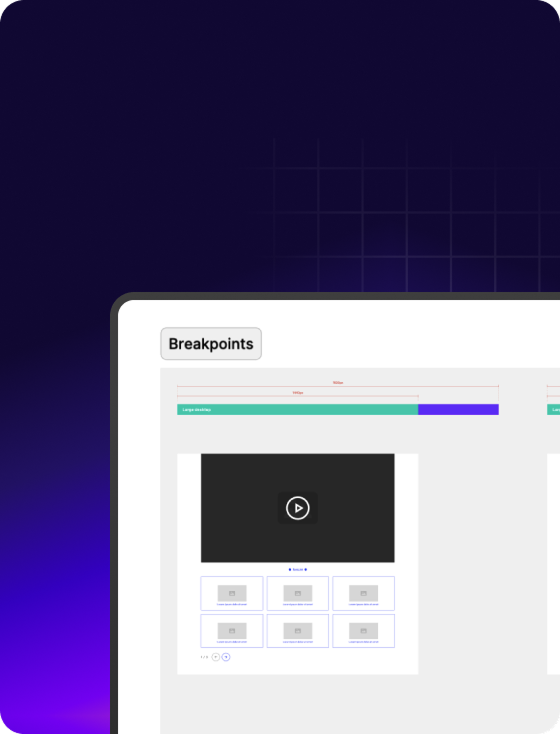

Wafer Design System
33
Intel AEM components supporting 17 developers and 23 designers.
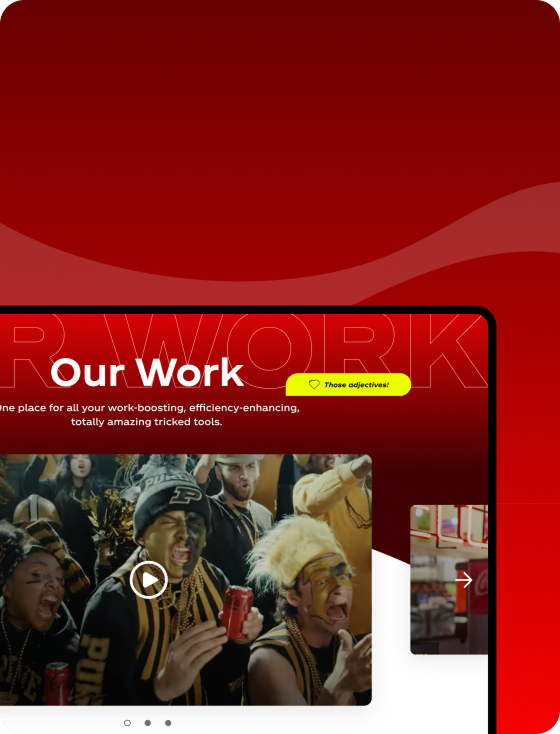

The Playground
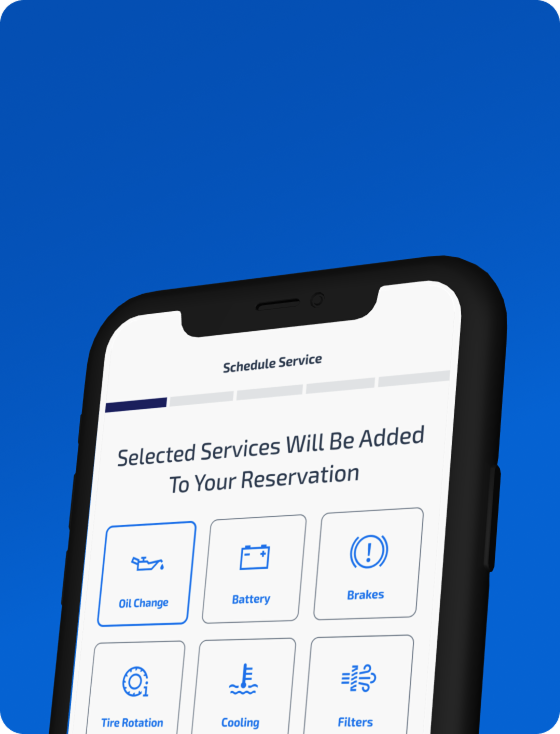

Guest Experience
+12
point increase in NPS after redesigning Ford's guest experience flow.
Let's Work Together
Reach out or add me on LinkedIn so we can connect and build something great.
Wafer Design System
33
Intel AEM components supporting 17 developers and 23 designers.
The Playground
Guest Experience
+12
point increase in NPS after redesigning Ford's guest experience flow.
Let's Work Together
Reach out or add me on LinkedIn so we can connect and build something great.
Guest Experience
Ford ran more than 2,000 dealerships, each stuck with separate tools and scheduling flows. Ford needed one shared experience to actually iterate against, not dozens of disconnected ones. As Associate Director, I oversaw the project and owned UI directly, working alongside a UX designer on the team, across both the customer booking flow and the dealer tool behind it. The goal was one scheduling experience for any customer at any dealer: pick what works, and Ford takes care of the rest.

One Front Door
To make that promise real, every dealer had to adopt this common platform. However, many dealers were satisfied with their legacy systems, on the front end and the back end alike, tools that already worked well enough day to day. Changing meant real disruption with no guaranteed upside on their end. Balancing Ford's consistency goal against the dealer's needs was a challenge.
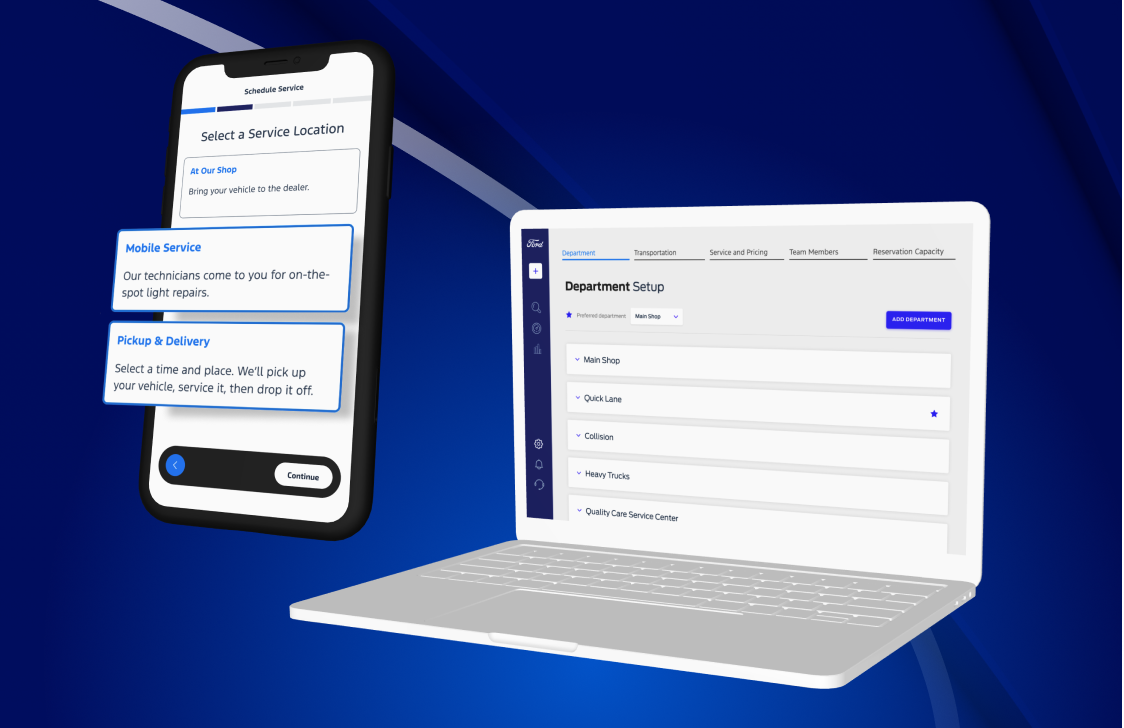
Simple on the Surface
We didn't guess at what dealers needed, we ran research and feedback panels directly with them, roughly 10 dealers per session, and let what they told us shape the backend. That surfaced real edge cases early: a repair that runs long, a custom department configuration, technicians overbooked. We built the routing logic to carry that weight, the right job, to the right service department, on the right timeline, so the simple front end customers saw could actually hold up once someone hit "book."
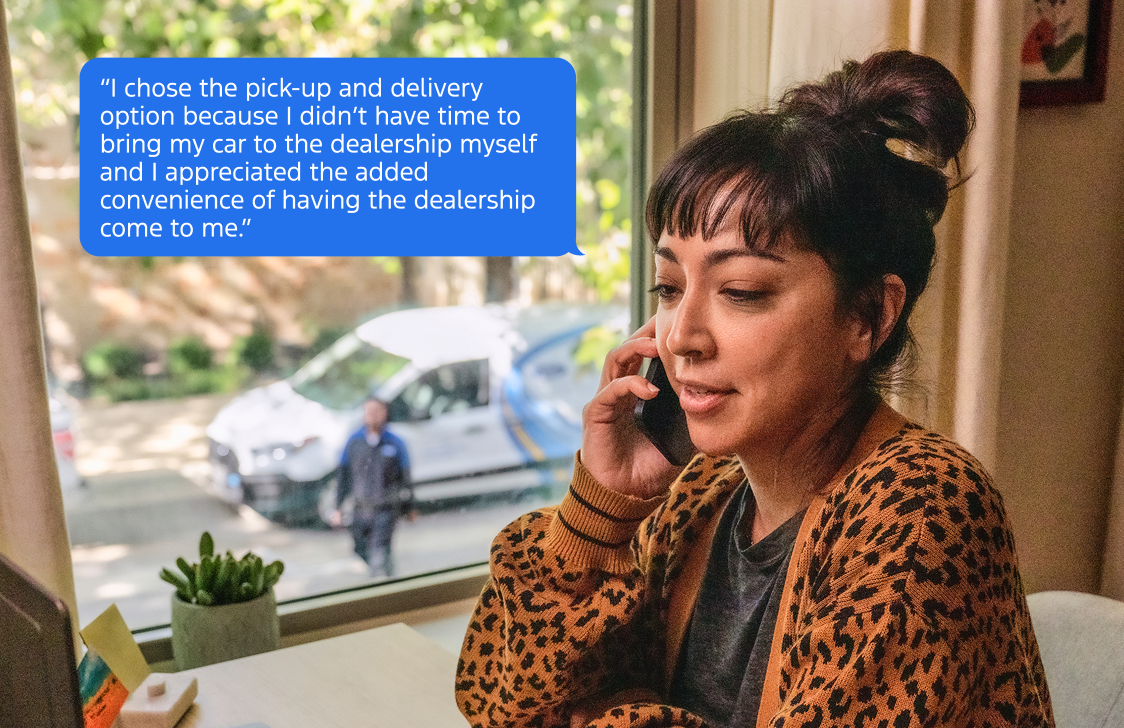
Built to Scale
The one-flow, any-dealer promise shipped and still runs today as Ford's active scheduling tool. Early results saw an uptick of 12 NPS points above historical service appointments. Before I moved onto other projects, the initiative had begun scaling to Latin America and China.